The Unlabeled Black Cassette
An unlabeled black cassette found in a market bin, carrying a room-like recording that makes loneliness feel occupied.
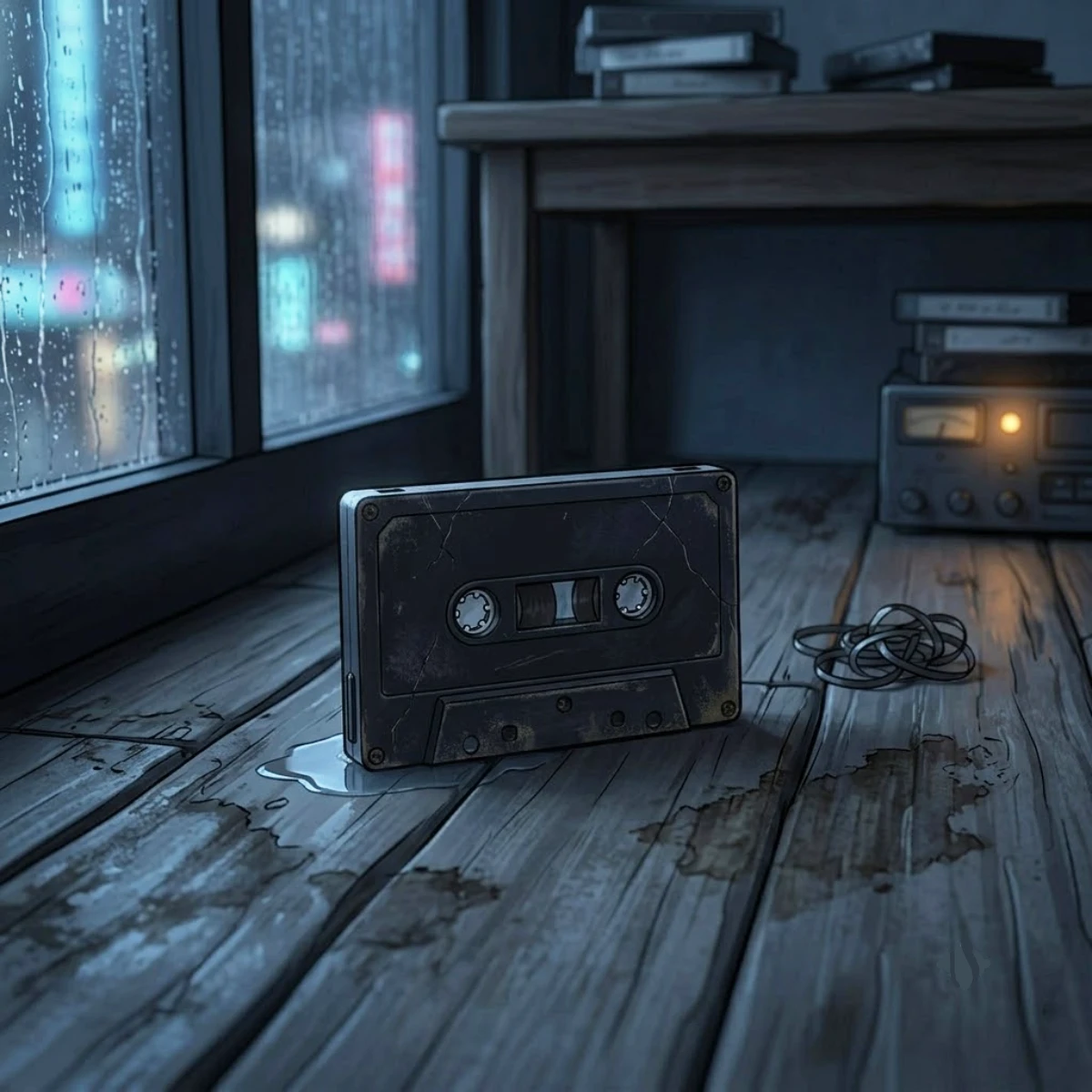
The Unlabeled Black Cassette first appears as an ordinary piece of old media: a standard black tape with no writing anywhere on it, slightly yellowed at the edges and sold from a weekend market bin for two hundred yen. Yuta buys it because he collects forgotten recordings, drawn to the melancholy of objects that once mattered to someone and now sit discarded among cassettes, VHS tapes, and old reels.
At first, the tape seems comforting rather than dangerous. It plays ambient sound: a room, traffic, a low hum, the feeling of somewhere safe, enclosed, and undisturbed. After his father’s death, Yuta begins using it as part of a nightly pattern. He comes home, plays the tape, sits by the window, and lets its sound fill the room. For a while, it helps. He sleeps better. He eats more. He starts to look alive again.
That is what makes the cassette frightening. It does not attack immediately. It offers presence. It makes absence feel inhabited. Then reflections begin to show something that is not physically in the room: a flat, clean-lined figure standing inside the reflected space, familiar in a way that is almost comforting. The tape does not simply record a room. It seems to make room for something.
By the end, the cassette is found cracked and unspooled, its magnetic tape dragged in long tangled loops across the floor, as if something had been pulled out of it too quickly or too completely. What remains is not proof anyone can easily explain, only a broken shell and the question of whether the tape preserved a voice, invited a presence, or gave grief a shape it could finally move through.
%20(1).png)

.png)
.png)
.png)