The Static Tape
A damaged VHS tape filled with static, missing footage, and the faint suggestion of someone moving between the frames.
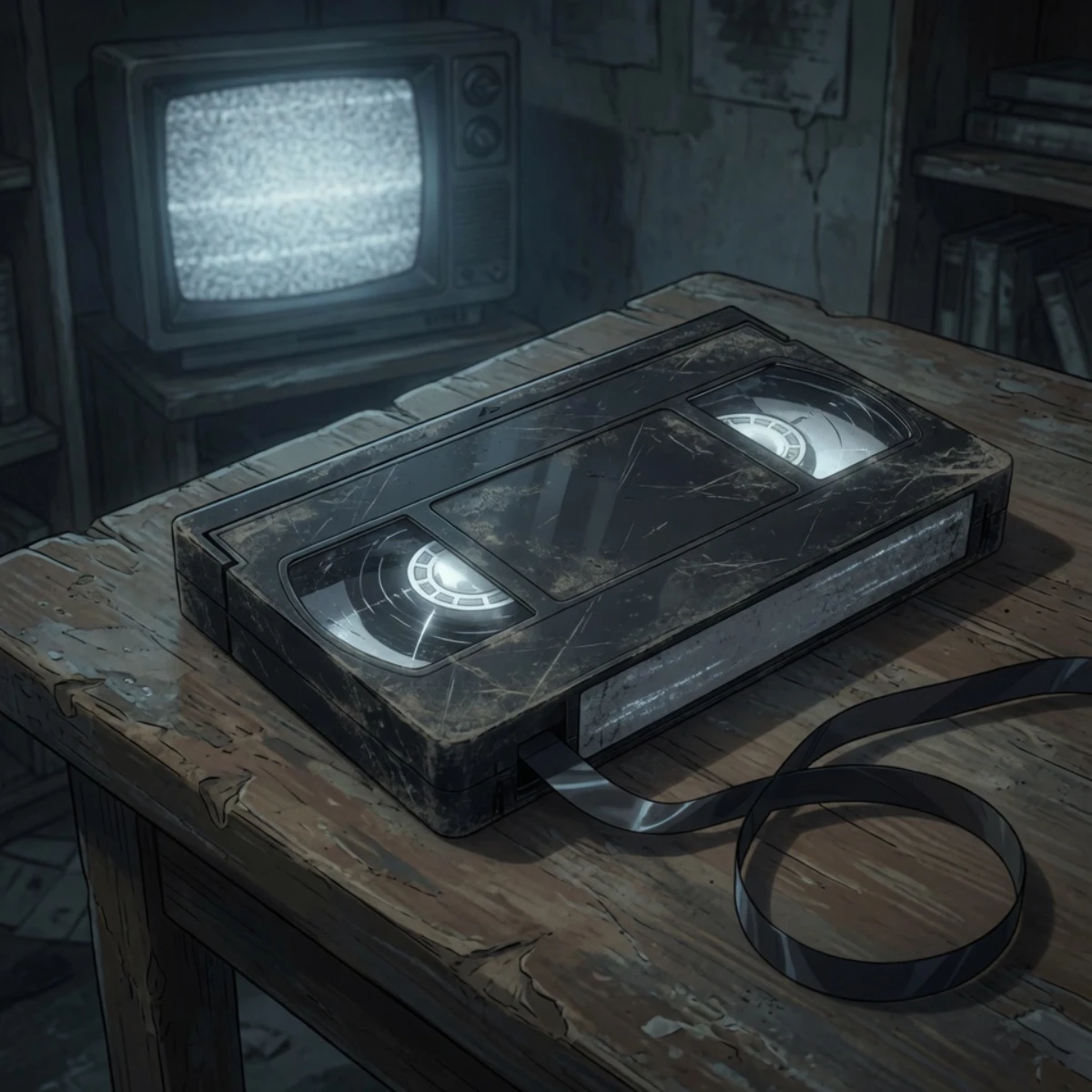
The Static Tape was found among old recordings that should have gone blank years ago. Its plastic shell is scratched, its label worn away, and the magnetic ribbon inside has slipped loose like something trying to escape. By all ordinary measures, it should no longer play. Yet when placed into a working machine, the tape does not show home video, security footage, or broadcast fragments. It shows static — endless gray-white noise shifting like snow behind glass.
At first, the static seems empty. Then the pattern begins to develop rhythm. A darker shape crosses the screen. A shoulder. A hand. A figure moving where no figure should be. The image never becomes clear enough to confirm what is there, but it becomes impossible to believe nothing is there. Each viewing creates the same feeling: that the tape is not showing a recording, but a place where something has learned to move through interference.
The danger of the tape is patience. It does not reveal itself all at once. It waits inside pauses, tracking errors, warped audio, and the soft hiss between channels. Viewers report losing small pieces of time while watching it, as if the static briefly replaces the room around them. The screen flickers, the air goes cold, and for a moment the person watching feels watched in return.
No one knows whether the Static Walker lives inside the tape, uses the tape, or was only captured by it by accident. What remains certain is that the recording should not be played in darkness, rewound alone, or left running after the screen has gone silent.
%20(1).png)

.png)
.png)
.png)