The Salvaged Sextant
A sea-worn brass sextant salvaged from a southern wreck, one of the instruments believed to have drawn something beneath the water north to Callow Mouth.
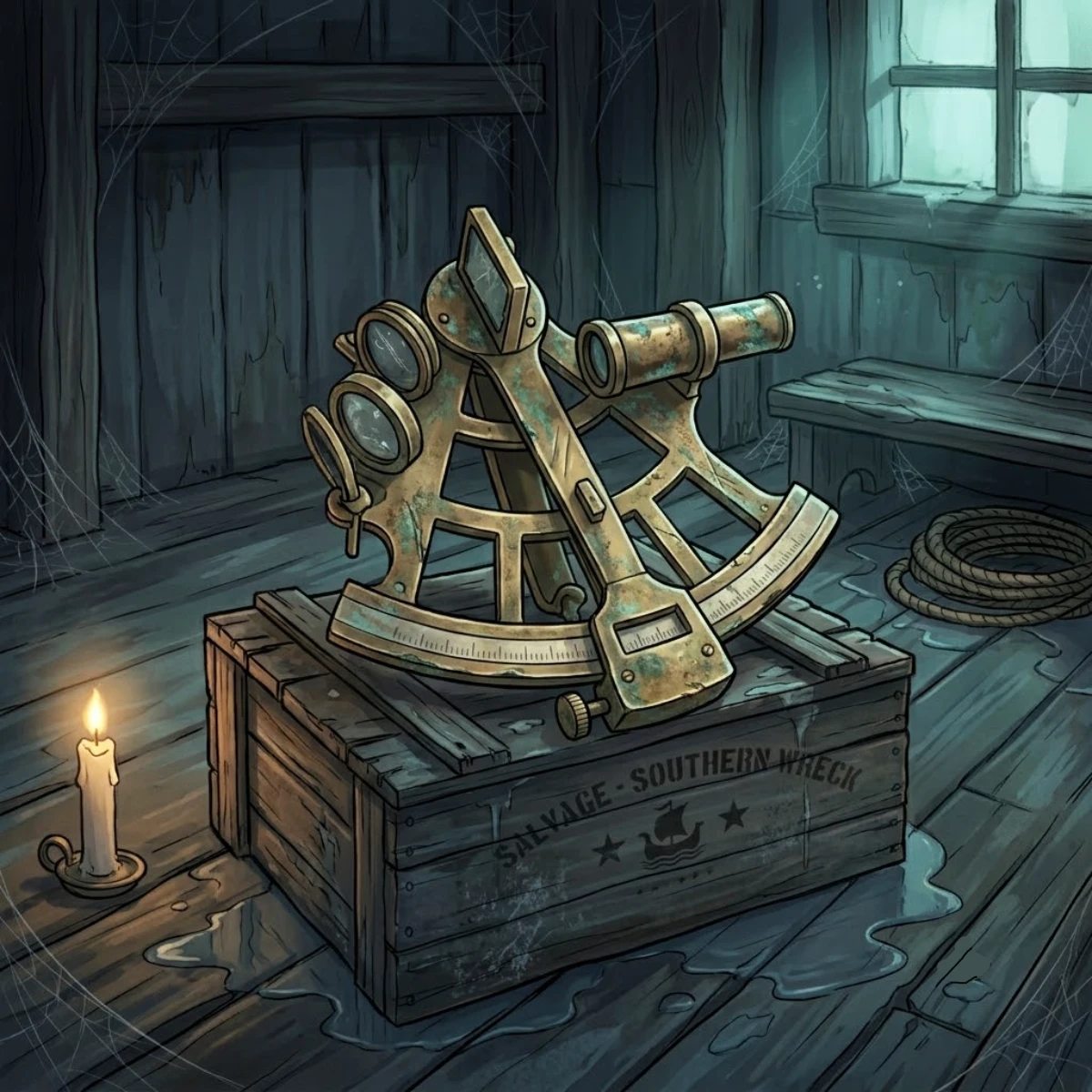
The Salvaged Sextant was recovered from a southern wreck and brought north with the other navigational instruments hidden inside the crates aboard the ship that docked at Callow Mouth. By itself, it is only brass, glass, salt corrosion, and old maritime craft — the kind of tool sailors once trusted to measure distance, direction, and survival across open water.
But the sextant’s importance lies in what followed it.
Captain Desh’s final records suggest that something had been with the wreck before the instruments were taken. Whether it had gone down with the ship, found the wreck afterward, or been drawn to the stillness of the sea floor, no one could say with certainty. What mattered was the pattern: the instruments were salvaged, brought north, and something followed them into Callow Mouth harbor.
That makes the sextant evidence, not treasure. It is a recovered object from the chain of mistakes that carried an unseen presence from a dead ship into a living port. Its tarnished frame and cracked glass hold no obvious threat, which is part of what makes it unsettling. The danger was never in the shine of the brass. It was in the assumption that objects pulled from the deep could be separated from what had learned to wait around them.
To Kaito, the Salvaged Sextant would not be proof of a curse. It would be proof of contact. Someone disturbed a wreck, moved its instruments, and unknowingly gave something beneath the water a road to follow.
%20(1).png)

.png)
.png)
.png)