The Rainwater Bowl
A shallow stone bowl kept in the church alcove of Voss, filled only with rainwater to maintain an old boundary agreement with the thing beneath the pond.
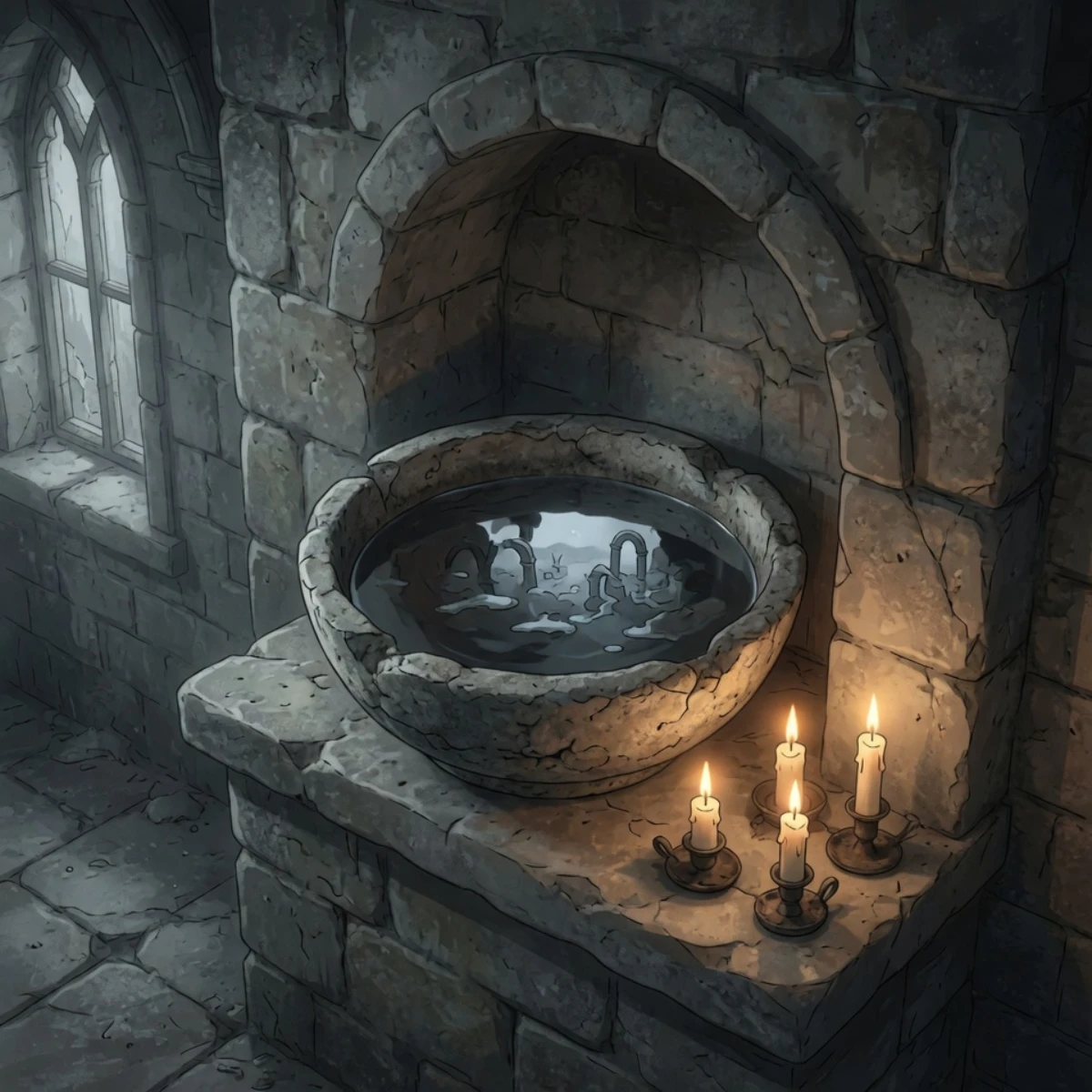
The Rainwater Bowl rests in a small alcove in the eastern wall of the old church at Voss. There is no saint’s figure above it, no decorative carving meant to explain it, and no inscription for ordinary villagers to read. It is simply there: a shallow stone vessel, older than the church around it, filled with water that does not reflect candlelight correctly. Three candles burn before it, not as ornament, but as duty.
The priest of Voss does not fully understand the bowl’s origin. His predecessors were instructed to keep it filled, but never with pond water or river water. Only rainwater may be used, collected under specific conditions. The practice has continued for generations because the years when it was neglected ended badly. In Voss, that is often the closest thing to an explanation anyone is willing to give.
The bowl matters because it is part of the old agreement between the village and the patient thing beneath the mill pond. The water is not worship. It is acknowledgment. So long as the bowl is maintained, the boundary holds: the thing remains in the pond, the village remains beyond its reach, and both sides remember the terms. When the mark appears, when the pond grows attentive, and when the water begins to behave as though it is watching, the bowl becomes one of the last signs that the old arrangement has not entirely failed.
To Kaito, the Rainwater Bowl is not a holy relic in the usual sense. It is evidence of maintenance — the kind of quiet, half-understood duty that keeps old dangers contained long after the people who made the agreement are gone. Its still surface holds no answers, but its presence proves that someone once knew enough to make terms, and someone after them knew enough to keep obeying.
Wrapper Line:
%20(1).png)

.png)
.png)
.png)