The Halcyon Salt
A shallow dish of pale sea salt left near the lighthouse, carrying the hush of the tide and the uneasy patience of the fae beneath the water
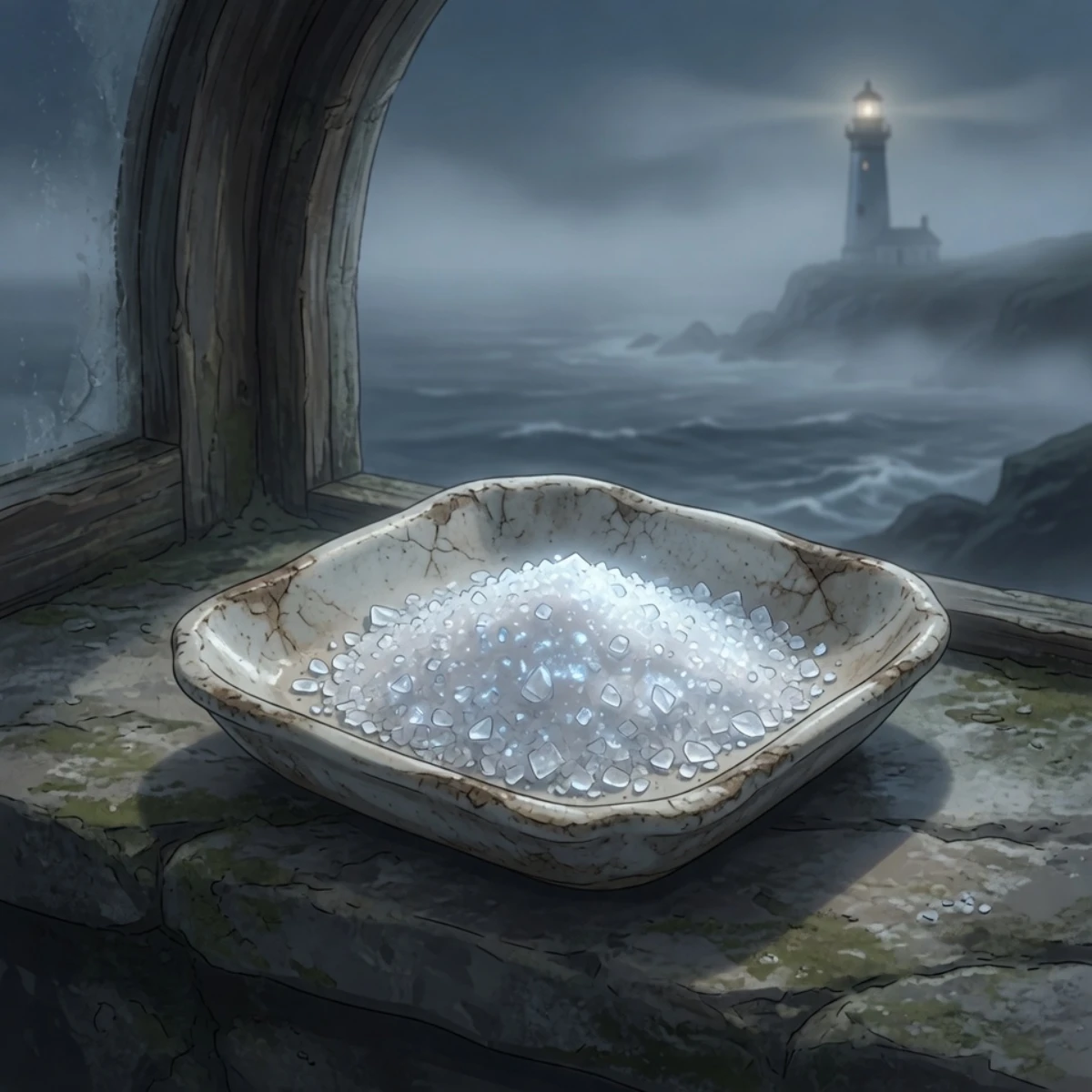
Halcyon Salt is not valued because it is rare. Salt can be gathered from any coast where the sea leaves its white trace behind. What makes this dish different is where it was kept, who left it there, and what silence gathered around it after the offering was made.
The salt belonged to the edge-place between the lighthouse and the water, between warning and invitation. To the keeper, it was a simple thing at first: a bowl of pale crystals, damp with mist, resting where the sea air could touch it. But the longer it remained, the more it seemed to hold the mood of the shore itself — moonlight, fog, old waves, and the feeling that something below the tide was waiting without anger.
It is called Halcyon Salt because it carries a false peace. Its stillness does not mean safety. It marks the kind of calm that comes before a voice from the deep, before a bargain, before a lonely soul mistakes being noticed for being saved. The fae connected to it does not need to shout. The sea has always known how to wear stone down slowly.
As an artifact, the salt represents patience, temptation, and the danger of gentle offers. It is not a weapon, nor a trap in the ordinary sense. It is a threshold object: small enough to overlook, strange enough to remember, and quiet enough to make the person standing beside it wonder whether the ocean has been listening all along.
%20(1).png)

.png)
.png)
.png)