Tamsin Adeyemi’s Cardiac Patch Transport Case
A field transport case used to carry three synchronized cardiac patches through the Sump, keeping them alive long enough to reach treatment before the battery gave out.
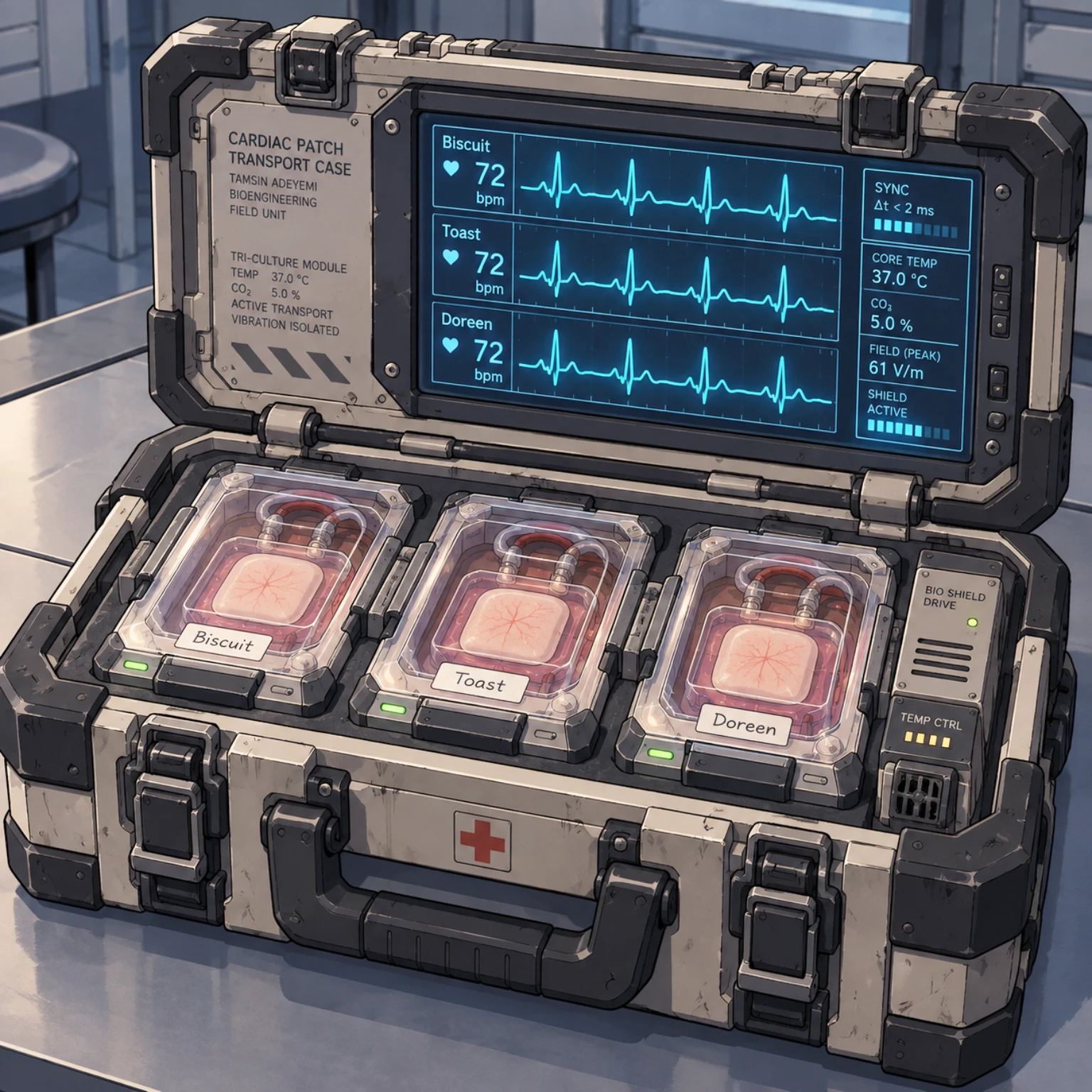
Tamsin Adeyemi carried the case herself.
Not because it was heavy, and not because anyone ordered her to. She carried it because the strap was unreliable, the crawler shook too hard, and the three living patches inside it mattered too much to leave to chance.
The case held Biscuit, Toast, and Doreen—three cultured cardiac patches kept alive inside shielded chambers no larger than a hand. Their rhythms were visible on the monitor from the moment the trip began, three thin traces beating in sync while the crawler pushed deeper into the Sump. That synchronization was everything.
The road out was never clean. Mud climbed over the tracks. Floodwater swallowed the ruts. Static rolled across the sky and the field strength kept rising until the storm finally broke over them hard enough to spike the system. The case took the hit with the rest of the crawler. The shielding held, the battery kept draining, and the monitor still showed three living lines.
By the time they reached the hospital perimeter, the battery was nearly gone. The case arrived with four minutes of charge remaining. All three patches were still synchronized. That was enough.
This artifact is not a ceremonial object or a polished medical display. It is a working transport case: scratched, shielded, stubbornly functional, and built to preserve life across one miserable stretch of road. For Tamsin, it was never just equipment. It was the difference between getting there in time and not getting there at all.
%20(1).png)

.png)
.png)
.png)