Orren Vassell’s Report
A diplomatic field report written by emissary Orren Vassell after entering Thur’Zakk’s war camp and realizing the Conclave’s records had failed to understand him.
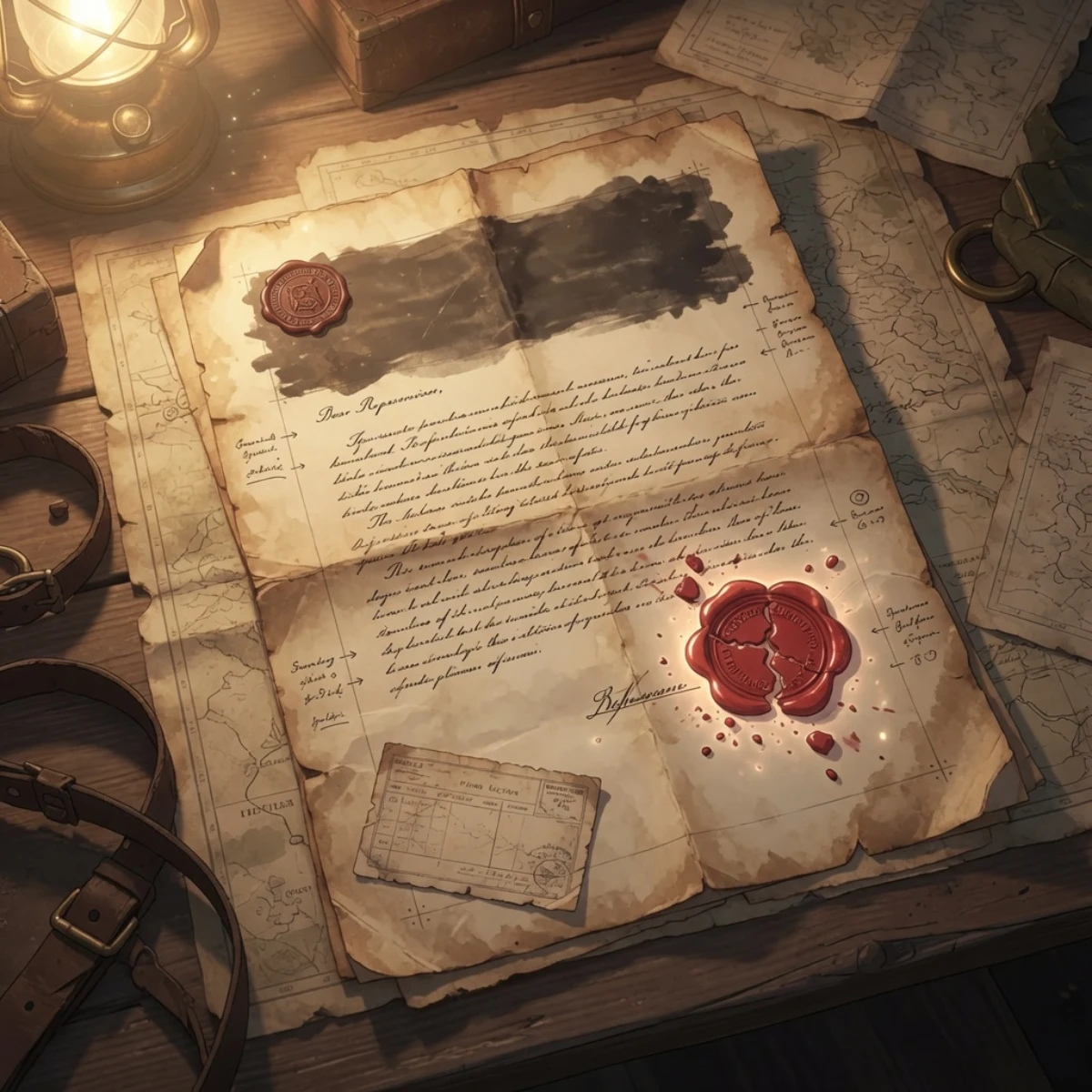
Orren Vassell’s Report began as a diplomatic necessity: a formal account from a merchant-house emissary sent north with prepared offers, political leverage, and a carefully measured understanding of what the Conclave believed Thur’Zakk to be. It was supposed to record the terms of contact, the state of the war camp, and the likely shape of negotiation. Instead, it became something far more valuable — the first serious correction to a lie powerful men had mistaken for intelligence.
Before reaching the camp, Vassell had been warned by a border lord, a temple scribe, and a soldier who had survived one of Thur’Zakk’s sieges. Each warning told him the same thing in different language: do not mistake the stories for exaggeration, and do not speak lightly in the presence of someone who remembers perfectly. Unlike many who came before him, Vassell listened. He went to the deep archives, studied the old accounts, and arrived afraid, but also curious.
The report’s importance lies in what it refuses to simplify. Vassell did not find a horde. He found an army. He did not find theatrical menace. He found discipline, order, and soldiers who behaved like professionals rather than monsters. The document records the moment when expectation failed against reality, when the emissary understood that the Conclave’s intelligence had described what its writers needed Thur’Zakk to be, not what stood in front of them.
Its red seal and field annotations mark it as an official record, but the weight of the report is personal. It is the testimony of a man educated enough to know history, frightened enough to respect it, and honest enough to admit when the old stories were not large enough. The document does not explain Thur’Zakk. It marks the moment Orren Vassell stopped trying to reduce him into something explainable.
%20(1).png)

.png)
.png)
.png)